Featured post

What Do High Growth Businesses Do Differently?

Over the past 5 years the importance of the “High Growth Business” and how this relatively small group of businesses disproportionally impa...

Showing posts with label pricing. Show all posts

Thursday, 25 October 2012

Get Profit from your Sales

  If You Haven't been to my blog before you might want to subscribe to my feed

English: Cost-Volume-Profit diagram, showing b...
English: Cost-Volume-Profit diagram, showing break down of Sales into Contribution and Variable Costs. (Photo credit: Wikipedia)
A recent blog post on pricing reminded me that we tend to forget how important it is to make a profit and often how little room for manoeuvre there is when playing around with prices.

The average profit for all limited companies across the UK before 2008 was 7%, yes that's £7 out of every £100. I'll accept that many smaller businesses typically owner managed will depress their reported profits in order to reduce their tax liability.  Having said that there's not many businesses that regularly report profit before tax of 10% or better. What that really means is that pricing and getting it right is really important.

So point number 1 you need to understand fully what it costs you to produce your product or service. I don't mean guess it I mean know it intimately and in detail.  Recently I went to what appeared to be a reasonably successful retailer who were struggling financially. Superficially things appeared OK nevertheless I asked them to fill out a detailed spreadsheet itemising all their costs and not surprisingly their situation was much worse than they anticipated. What it had done was to get the business owners to focus on what it really took to run their business and that pricing was a much more important than perhaps they first realised, as a result now everything is priced on the basis that it makes a profit in its own right and in some cases that has meant a significant increase in individual product prices.

 For companies with a sales team, this message often gets lost, particularly as most sales people are rewarded against sales revenue and not profit per sale. Consequently if sales people are in a sticky position they automatically reach for the price lever and drop the price, after all a 10% discount on a 100k sale is only 10K  and that's relatively easy to find. The fact that it may have completely wiped out the profit on the sale is not on their radar.

So point number 2 get your sales team to focus on profit and not turnover. How can yo do this? Well how about giving them a little bit of training so they understand the mechanics of the business, and you could reinforce this by rewarding them on profit not turnover.

I've only be able to do this once but boy is the impact immediate. No more is there the argument that we had to sell this with a big discount to give us a foothold in this new account, nor is there the plea that "if I didn't give him that discount(and its usually a big one) we wouldn't have won the sale."  Why, because sales people don't want to go through all the effort needed to win a sale and end up getting no commission.

Interestingly what you do get are rather more searching questions like what does it cost us so much make this stuff, what else can we offer if we cant move much on price? This should lead both you and your sales staff to examine and really understand your company's value proposition and discover how to best promote them, which is no bad thing.

The important messages are that as a business owner, profit should be your prime motivator when selling. In order to do this you need to understand what your true costs of production are before adding in your profit and only after that setting your price.

Motivating your sales using profit has some beneficial side effects in forcing them and indeed to you really understand and to be able to justify why you sell what you sell at the price you sell it.

Exigent Consulting provides specialist services for High Growth BusinessesBusiness Turnaround, and Mentoring to the Small and Medium Business. We help business owners improve the profit performance of their business. 


Tuesday, 2 October 2012

Pricing objections - what they really mean

  If You Haven't been to my blog before you might want to subscribe to my feed

Pricing is perhaps one of the most misunderstood issues in business, if used properly it's one of the simplest ways to help you maximise your profits. Easy then, so what's the problem?

The problem with owner managed business is that they assume that they must be the cheapest to survive and are often very reluctant to raise prices, even in the face of ever rising overheads, just think of energy, fuel and courier(UPS) costs to mention a few. If I had a £1 for every time I've heard a company owner say "if I raise my prices I'll lose all my customers so I have to keep them as they are" I'd be very rich – sadly I'm not.
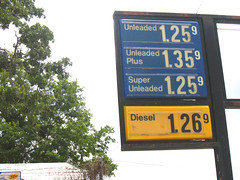
Gas Prices Are Up!!! Feelin' the Pinch...
Gas Prices Are Up!!! Feelin' the Pinch... (Photo credit: Clan UiBriain)

Why do so many people think like this? Much of it is conditioning, whenever we are not satisfied with a company for whatever reason we complain about the price. 

Let me give you some examples:

You're visited by a salesman who can't articulate the benefits of his product. 
What do you tell him when he asks for the business,"I'm sorry but I don't see a reason to buy this" or do you say "I'm sorry but it's too expensive".

You're visited by a salesman who you just don't like. What do you tell him when he asks for the business,or do you say "I'm sorry but I just don't think you're trustworthy" or do you say "I'm sorry but it's too expensive".

You're visited by a salesman who just doesn't get the point you're trying to make. What do you tell him when he asks for the business, "I'm sorry but you don't understand my problem so I'm not interested" or do you say "I'm sorry but it's too expensive"

You're visited by a salesman who's too pushy. What do you tell him when he asks for the business, "I'm sorry but you're the last person I'd buy anything from" or do you say "I'm sorry but it's too expensive"

You should be getting a message by now pricing is rarely the issue, price objections are mostly a cover for some other objection. So what does this tell us? The first thing is that raising your price is nothing to be afraid of. The second is that if pricing is seldom the real issue, raising your prices even in a recession wont frighten off your customers. Why? because the reason they are staying with you are not price related, it could be that you're convenient, they like you, they love your brand, you've helped their business, you are reliable, and so on....

So now you know let's look at what you can do. Well one thing you could try is to increase all your prices by 1% immediately. Why, because you can; if you're selling something for £100 pounds people aren't going to stop buying it because it now costs £101.

"I can't we're in the middle of the worst recession in living memory you must be nuts" – you say.

I say "no, its your conditioning that says that". 

I can in all honesty say that in almost every company I work with; one of the first things I do is to get them to increase their prices and having done so they are surprised that they don't lose any customers in the process. Yes even in the worst recession in living memory. Why? Am I a genius – I hope so – but no. Am I a magician – no. The answer is almost invariably, because most small companies are selling their product or service too cheaply because they've been conditioned to this as those people who don't want to buy from him use price as the objection.

Realistically as a small business owner you should understand that price is only factor among many people assess before purchasing and its by no means the main factor. Your price should reflect your costs and be sufficient to give you a decent profit. In order to price correctly you should have a detailed analysis and understanding of your costs. This is something that many businesses don't have. Only by understanding what and how your costs are made up in detail can you accurately set your prices over the long term. Whilst the general rule with pricing is that your sales price is 2.4 time manufacture costs, it's still a rule of thumb and likely to lead to a guess-timate of costs which will almost always be less than the real costs.

You should be increasing your price at a minimum annually to keep in step with the inevitable rise in your costs and additionally if there is a major change in the price of components. Don't worry if you are not the cheapest because it is rare that you will be as there is always likely to be a business with a lower price. Anyway you don't want to be the cheapest because down there is no customer loyalty.

So remember that pricing objections are more likely a cover up for other deficiencies, so don't be afraid to raise your prices and ask those price objectors what they're really unhappy about.

Exigent Consulting provides specialist services for High Growth Business Business Turnaround, and Mentoring to the Small and Medium Business. We help business owners improve the profit performance of their business. 


Thursday, 6 October 2011

Cash is King -Yes, But Not at Any Price

I was reminded the other day how people can get so focused on a mantra that they lose sight of context. Yes in a tough market Cash is King but not to the detriment of everything else.

Cash Is King
Let me explain, I was having a discussion with an internet business owner who was moaning about poor sales, and the fact that to get cash in he needed to reduce his margin. The more we talked the more I began to question the strategy of reducing price to get the cash in. His response always started with "well you know in these times Cash is King... 

Eventually I got him to show me an example of how this worked for him. Once he had finished I asked him a question "Ok, so if you are giving away margin, are you making any profit at the reduced level?" 

"Well that doesn't matter what is important is to get some cash in to pay suppliers and re order product." came the response.

"But surely if you are losing money on each sale getting the cash in, you are making the situation worse, not better. " 

"At the moment getting cash in is whats important"

"How regularly are you doing this? Is this just to clear dead stock for example?"

"Quite frequently because when we put our products out at full price we are losing sales to cheaper providers so we use this to strategy to get the cash in"

At this point I was getting a little concerned, "But surely you must know if you are making a profit otherwise you will only be building up bigger and bigger losses, after all if you are only losing £1 per item if you sell 1000 of them you've lost £1000!"

"Yes but if you don't get the cash in when you need it you can't pay suppliers and they put you on stop"

We were in danger of getting into a circular argument, so I suggested that if he wanted we could look in detail at his pricing to see if he was making the situation worse or better. What we discovered subsequently was that he was indeed making a loss on his reduced items but more worryingly also on some of his regular priced items, and that his dedication to blindly follow the Cash is King mantra was killing his business.  

So the moral of this story is yes "Cash is King" but getting cash in is only worth pursuing if its in the interests of your business. I do appreciate that there are times when you may make a loss sometimes; for example if you are off loading poor moving stock, but generating cash flow by cutting your margin without understanding the consequences of your actions is a dangerous strategy.

Exigent Consulting provides specialist services for High Growth Business Business Turnaround, and Mentoring to the Small and Medium Business. We help Business Owners improve the profit performance of their business. 


Tuesday, 15 June 2010

Inappropriate Use of the Fword

Many consultants consider that providing some Fr** consultancy will assist them in developing a relationship and therefore work with a client. I have a real problem with the Fword in that it gives all the commitment and risk to the provider and none to the buyer. Typically it’s treated with less respect by the buyer because it doesn’t matter as its F***. With all consultancy and advice once you've given it you can’t take it back. Sometimes the clients problem is so basic that as a consultant you can provide the solution in a few words, don’t because you'll end up with a very happy lost prospect whose had his problem solved for nothing. Providing Fr** (there I still can’t say it) consultancy undervalues what you're offering.

However for those with an empty pipeline or who are weak closers Fr** is a way of engaging the customer. If you feel you must offer something try the following "lets meet up for X hrs next week. Lets agree now that if you don’t get value from that meeting we will shake hands I'll walk away and you'll owe me nothing, if, however, you do get value then you agree to pay me £X." When I've used this line as a close and it’s been accepted I've always got paid for that meeting getting paid for subsequent meetings or projects is then a non issue.

Friday, 26 March 2010

The Lasting Effects of Quality

I wanted to use two stories the show how different views towards providing quality product or service can leave a lasting impression on your customers.

Some five years ago we bought a settee from Laura Ashley. It was quite expensive for us but we liked the design so we bought it. The company also offered a five year guarantee. After nearly five years one of the legs of the settee failed. We phoned up Laura Ashley who promptly set out their customer service representative to look at the situation. On her arrival she had agreed without hesitation that yes indeed the settee was faulty and she would have arranged to have it replaced. Cheekily I asked if he would be possible to change the material on the replacement setting since the old material clashed with our new decor and didn't appear to wear that well. The customer service lady said that wouldn't be a problem and we would only have to pay for the difference in grading of the new material as compared to the old material. Eight weeks later our new settee arrived. Since then, and whenever we can afford it we buy Laura Ashley products.

By contrast when we first got married we went to a very friendly and cheaply priced furniture store called Cantors; which by the way, sadly no longer exists. We bought a lovely settee at a cheaper price. The company arranged to deliver it within six weeks. We were duly informed it was ready for delivering, about 3.30 PM I've got a distressed call from my wife yes the settee have been delivered but it was quite big and the delivery men had struggled to get it into a hall. At which point they said the settee had been "delivered" and promptly left, effectively blocking the front door as an exit to the house. So on my return from work I spent an hour or so struggling to get the settee from the hall into the lounge and set up. We did love that settee, but we never did buy anything else from Cantors again.

The moral of this story, is of course, that you get what you pay for. The reason why Laura Ashley could offer such a high quality service was because they had included it in the price of their product. It should be clear from this that as a business owner you can either provide limited customer service for a cheap price, or an excellent service at a high price. What you can't do is to provide an excellent service at a cheap price.

Saturday, 11 July 2009

Taking Your Business to the Gym – Pricing for Profit

I was giving a seminar recently and it included a section on pricing. What really shocked me was how few people understood how to price properly and just how many businesses were almost paralysed with fear about raising their prices. Now i understand that we're the worst recession for at least 20 years, but at least 50% of my audience had not increased prices for more than 2 years. Their argument in a nutshell was that they couldn't increase their prices because they'd lose too many customers. I asked them if any of their suppliers had increased prices to them in that time, not surprisingly many of them complained just how many times suppliers had raised prices over the period. When I asked if they had changed suppliers as a result of these price increases they said, without exception, no. In fact they seemed rather surprised that I should even suggest it. My question was then if you've accepted price increases from your suppliers why won't your customers accept price increases from you. At this point there was a lot of murmuring and a few brave souls suggested because they were small companies there would be less loyalty and their customers would move. I simply can't except that as a valid argument and experience shows that most customers are immune to price increases.

I decided then to demonstrate how raising your price delivers more profit even if some of your customers leave.

No of units

10

9

11

Price per unit

10

11

9

Sales Total

100

99

99

Fixed cost

30

30

30

Variable Cost@£6 per unit

60

54

66

Profit

10

15

3


The table above explains what I mean. Let's assume you sell ten units of a product at £10 each giving you a sales income of £100. Of that £30 was fixed cost and the variable cost was £6 per item sold equalling £60 which when subtracted from your sales total gives a profit of £10. In our second case we raise our prices by 10% which leads to a fall in demand of 10%> So we now sell 9 units at £11 pounds each total sales are £99, fixed costs remain at £30 and variable costs are only £54 leaving a profit of £15. In our third scenario we reduce prices by 10% which in turn leads to a 10% increase in sales. We still only have £99 in sales however variable costs have gone up to £66 leaving a paltry £3 profit.

So what conclusions can we draw from this situation, well firstly to price for profit you MUST increase your prices, if you hold you prices whilst your suppliers increase their you are in effect offering a hidden discount and putting pressure on your margins as your variable costs are increasing. In the example above a 10% discount means you have to increase sales by 33% to maintain your profit. By contrast if you increase sales by 10% sales have to fall by more than 20% for profits to suffer. The most important thing however is to understand is that in reality most people are price insensitive, for example on Accountant client I worked with increased their prices on simple tax returns by 100% and lost only 5 out of 80 clients delivering over £15000 in extra profit.

Exigent Consulting specialises in providing Business Turnaround, Sales, Marketing and Mentoring to the Small and Medium Business. We help Business Owners improve the profit performance of their business.
Friday, 15 May 2009

Take Your Business to the Gym - Pricing

This is one of a series of occasional articles about dealing with the downturn and what you can do to get your business fitter to survive, whilst many of your competitors may fail. The idea of Taking Your Business to the Gym comes from the view that over the last 8-10 years things have relatively speaking been easy. Company liquidations have been at low levels both consumer and business to business markets have been strong and companies have had no real pressure to look at themselves and seek improvement. Many have but most have become a little complacent over optimistic and so flabby. This recession has thrown an assault course in the way and you've got to get fit quickly to make it through.

Pricing is perhaps one of the most misunderstood issues in business, if used properly it's one of the simplest ways to help you maximise your profits. Easy then, so what's the problem?

Simple question: who sets your company's prices is it determined by you or the market?

All those who said the market – Your Wrong – it's YOU! It's one of the most basic misconceptions about business whilst the market might dictate general pricing levels individual companies set their own prices. The problem with owner managed business is that they assume that they must be the cheapest to survive. If I had a £1 for every time I've heard this I'd be very rich – sadly I'm not.

Why do so many people think like this? It's conditioning, let me give you some examples

You're visited by a salesman who can't articulate the benefits of his product. What do you tell him when he asks for the business, I'm sorry but it's too expensive.

You're visited by a salesman who you just don't like. What do you tell him when he asks for the business, I'm sorry but it's too expensive.

You're visited by a salesman who just doesn't get the point you're trying to make. What do you tell him when he asks for the business, I'm sorry but it's too expensive.

You're visited by a salesman who's too pushy. What do you tell him when he asks for the business, I'm sorry but it's too expensive.

You should be getting a message by now pricing is rarely the issue, price objections are mostly a cover for some other objection. So why is it we know we're not telling the truth when we hide behind price, but assume others are telling the truth when they tell us we're too expensive. I really can't explain I can only assume that we just don't want to face the real issue so we accept pricing as the issue.

So now you know let's look at what you can do. Well one thing you could try is to increase all your prices by 1% immediately. Why, because you can; if you're selling something for £100 pounds people aren't going to stop buying it because it now costs £101.

I can't we're in the middle of the worst recession in living memory you must be nuts – you say.

I say – no, its your conditioning that says that. I can in all honesty say that in almost every company I work with; one of the first things I do is to get them to increase their prices and having done so they are surprised that they don't lose any customers in the process. Yes even in the worst recession in living memory. Why? Am I a genius – I hope so – but no. Am I a magician – no. The answer is almost invariably, because companies are selling their product or service too cheaply because they've been conditioned that "Cheap is Good".

Realistically as a small business owner you should understand that whilst price a factor in purchasing its by no means the main factor, people tend to buy more on quality brand capability and service. Your price therefore, should reflect your costs and be sufficient to give you a decent profit. So in order to price correctly you should have a detailed analysis and understanding of your costs. This is something that many businesses don't have, only by understanding what and how your costs are made up in detail can you accurately set your prices over the long term. Whilst the general rule the sales price is 2.4 time manufacture costs, it's still a rule of thumb and likely to lead to a gestimation of costs which will almost always be less than the real costs.

As a general rule you should be increasing your price at a minimum annually to keep in step with inflation and also when there is a major change in the price of components. Don't worry if you are not the cheapest because it is rare that you will be as there is always likely to be a business with a lower price. Anyway you don't want to be the cheapest because at those levels there is no customer loyalty.

Finally your price should reflect your product position. Simply put you can't offer a Rolls Royce product or service for the price of a Ford, unfortunately many business owners believe that's the only way they can survive which is often the very reason they don't.

You can contact me at www.exigent-uk.com for more information on how I can help you manage your pricing more effectively.